
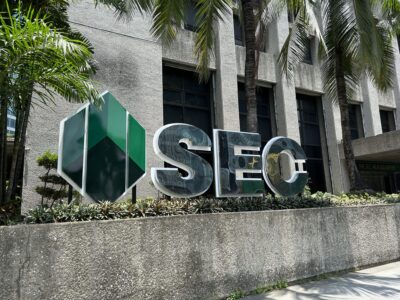
In the Philippines, the process of registering a new corporation involves critical financial decisions that lay the groundwork for future growth, regulatory compliance, and investor confidence. One of the most pivotal steps in this journey is determining the appropriate financial structure as dictated by national capital requirements. The Revised Corporation Code of the Philippines (Republic Act No. 11232), which officially took effect on February 23, 2019, introduced sweeping reforms designed to modernize the corporate landscape and align it with global standards for the ease of doing business. Central to these progressive reforms was the complete overhaul of the minimum and maximum authorized capital benchmarks for new domestic and foreign-owned enterprises.
For entrepreneurs and multinational firms working with Triple i Consulting, understanding these capital requirements is absolutely essential for long-term strategic planning. The authorized capital stock not only represents the maximum amount of equity a company can raise through share issuance, but it also dictates initial incorporation costs, potential tax liabilities, and day-to-day operational flexibility. Whether you are establishing a localized One Person Corporation (OPC), a fully foreign-owned subsidiary, or a highly regulated financial institution, navigating the nuances of these rules ensures a seamless transition from initial incorporation to full-scale commercial operations.
Understanding Authorized, Subscribed, and Paid-Up Capital
Before diving into the specific legal thresholds, it is essential to distinguish between the three primary tiers of corporate capitalization recognized under Philippine law. These distinctions form the basis of all capital requirements evaluated by the Securities and Exchange Commission (SEC) during the incorporation process. Misunderstanding these financial terms can lead to defective Articles of Incorporation or the outright rejection of a corporate registration application.
The three foundational components of a corporation’s equity structure include:
- Authorized Capital Stock: This is the absolute maximum amount of capital (for par-value shares) or the maximum number of shares (for no-par-value shares) that a corporation is legally permitted to issue to investors, as formally declared in its SEC-approved Articles of Incorporation.
- Subscribed Capital: This represents the portion of the authorized capital stock that investors have formally agreed to purchase, constituting a binding legal contract between the subscriber and the newly formed corporation.
- Paid-Up Capital: This is the actual amount of money or property that has been transferred to the corporation as payment for the subscribed shares, serving as the real, liquid fund available for the company’s immediate operational use.
The General Rule: Zero Minimum Capital Requirements
Historically, the old Corporation Code of the Philippines (Batas Pambansa Blg. 68 of 1980) mandated a rigid baseline for incorporation, requiring all new stock corporations to have a minimum authorized capital stock of at least ₱5,000. While nominal, this requirement was widely viewed as an unnecessary administrative barrier that failed to guarantee meaningful corporate solvency for modern businesses. The Revised Corporation Code radically altered this framework by completely eliminating the statutory floor for standard domestic businesses, aiming to promote the ease of doing business across the nation.
Pursuant to Section 12 of the RCC, stock corporations are no longer bound by general minimum capital requirements unless explicitly mandated by special regulatory laws. This liberalization yields several key benefits for the business ecosystem:
- Enhanced Accessibility: Micro, Small, and Medium Enterprises (MSMEs) and startup founders can incorporate with a minimal capital requirement (e.g., ₱1,000), drastically lowering the financial barrier to formalizing a legitimate business entity.
- Alignment with Global Trends: The removal of arbitrary minimums aligns the Philippine corporate framework with progressive jurisdictions in Southeast Asia, fostering a more competitive environment for domestic enterprise creation.
- Flexibility for One Person Corporations (OPCs): Single stockholders forming an OPC under Title XIII of the RCC have the absolute discretion to set their authorized capital stock at a level that accurately reflects their immediate business needs without conforming to an outdated baseline.
The 25/25 Rule: Mandatory Subscription and Payment Thresholds
While the RCC successfully eliminated the absolute minimum threshold for authorized capital, it maintained strict proportional rules regarding subscription and payment to ensure that a newly formed corporation possesses actual, usable funds. These proportional capital requirements act as a critical safeguard against the creation of “shell” companies with purely theoretical capitalization.
Regardless of the authorized capital amount declared, incorporators must strictly adhere to the standard “25/25 rule” at the time of corporate registration. This regulatory mechanism operates through the following mandatory steps:
- Minimum Subscription: Under Section 60 of the RCC, at least twenty-five percent (25%) of the total authorized capital stock must be subscribed by the incorporators at the time of formation.
- Minimum Payment: Furthermore, under Section 62, at least twenty-five percent (25%) of that total subscribed capital must be fully paid in cash or property upon subscription.
- Prohibition on Treasury Shares: Incorporators must use entirely new capital, as treasury shares or previously issued shares cannot be used to satisfy these strict 25%/25% incorporation requirements.
For example, if a company registers with an authorized capital stock of ₱1,000,000, at least ₱250,000 must be subscribed. Of that ₱250,000 subscription, a minimum of ₱62,500 must be deposited into a corporate bank account as paid-up capital before the SEC approves the registration. Failure to meet these thresholds renders the Articles of Incorporation defective and subject to immediate rejection.
Exceptions: Industry-Specific Capital Requirements
The general rule of “no minimum capital” under Section 12 of the RCC is expressly subject to exceptions provided by special Philippine laws. Highly regulated industries that involve public interest, systemic financial risk, or national security are subject to stringent capital requirements mandated by their respective regulatory agencies. In these scenarios, the authorized capital stock must be structured to seamlessly accommodate the massive paid-up capital thresholds required for licensing.
Special laws dictate elevated capitalization for the following critical sectors:
- Banking and Quasi-Banking Institutions: Regulated by the Bangko Sentral ng Pilipinas (BSP) under the General Banking Law of 2000, universal and commercial banks must demonstrate paid-up capital ranging into the billions of pesos to absorb financial shocks.
- Insurance and Pre-Need Companies: Governed by the Insurance Commission under Republic Act No. 10607, these entities must maintain several hundred million pesos in paid-up equity, varying based on whether they offer life, non-life, or pre-need products.
- Investment Houses and Broker-Dealers: Overseen by the SEC and the BSP under the Financial Products and Services Act, these firms face mandatory minimum capital requirements (e.g., ₱300 million for investment houses) to ensure market stability and investor protection.
- Public Utilities and Mining: Companies engaged in telecommunications, water distribution, or large-scale resource extraction must meet heavy capitalization benchmarks defined by their specific national franchises or the Philippine Mining Act.
Strategic Capital Requirements for Foreign Investors
For multinational corporations and foreign nationals seeking to establish a footprint in the Philippines, the corporate capital landscape is primarily governed by the Foreign Investments Act (FIA), Republic Act No. 7042, as amended. The FIA imposes specific minimum capital requirements designed to protect domestic micro-enterprises while simultaneously encouraging substantial foreign direct investment that creates local jobs and introduces new technologies.
When a domestic corporation has significant foreign equity participation, it must carefully navigate the following capital tiers depending on its intended commercial activity:
- Standard Domestic Market Enterprises: A foreign-owned business catering primarily to the local Philippine market must have a minimum paid-in capital of US$200,000.
- Reduced Capital for Advanced Technology or Employment: This strict US$200,000 requirement can be lowered to US$100,000 if the enterprise utilizes advanced technology or employs at least 50 direct, local employees.
- Export-Oriented Enterprises: If the foreign-owned company is designated as an export-oriented or pioneer enterprise, the heavy capital thresholds are often significantly lowered or waived entirely to incentivize international trade.
The Absence of Maximum Authorized Capital Limits
Just as the Revised Corporation Code removed the minimum floor for most standard businesses, Philippine corporate law imposes absolutely no upper limit or maximum ceiling on a corporation’s authorized capital stock. Incorporators have the unconditional freedom to declare an authorized capital of any magnitude—whether it is precisely calibrated for current operations or expanded into the hundreds of millions to cover future business phases. However, while there are no legal constraints, there are substantial financial and strategic implications that govern these maximum capital requirements.
Setting an excessively high authorized capital stock at the outset carries the following practical consequences for the corporation:
- Proportional SEC Filing Fees: The SEC explicitly computes its incorporation filing and legal research fees based on a percentage of the total authorized capital stock, meaning a higher authorized capital results in significantly larger upfront government fees.
- Financial Flexibility vs. Cost: Many incorporators elect a nominal authorized capital to minimize initial SEC fees while retaining the flexibility to formally increase the capital and issue additional shares later.
- Future Amendment Requirements: Conversely, setting the capital too low may require the corporation to undergo a costly and time-consuming process of amending the Articles of Incorporation to increase the authorized capital when new investors enter.
Procedural Aspects of Capitalization at Incorporation
To successfully navigate the registration process, incorporators must properly document and prove their comprehensive compliance with their chosen capital requirements. The SEC Corporate Finance Department rigorously examines the submitted incorporation packets to ensure that all statutory minimums—especially for foreign-owned or heavily regulated entities—are met before issuing the Certificate of Incorporation.
The procedural execution involves several mandatory steps that must be fulfilled precisely:
- Declaration in the Articles: The exact authorized capital amount, the number of shares, and the par value (if applicable) must be explicitly stated in the formal Articles of Incorporation.
- Treasurer’s Affidavit: The elected Corporate Treasurer must execute a sworn affidavit certifying that the 25% subscription and 25% payment thresholds have been fully satisfied in cash or property.
- Proof of Bank Deposit: For the paid-up portion, cash must be deposited into a bank account in the name of the corporation, and the corresponding bank certificate must be attached to the corporate application.
- Personal Liability for Non-Compliance: Incorporators or directors who falsely certify compliance with these capitalization rules face severe administrative, civil, or criminal liability under the RCC.
Final Insights
The modernization of Philippine corporate law through the Revised Corporation Code has created a highly flexible and dynamic environment for business formation and economic growth. By eliminating general minimum authorized capital thresholds, the State has empowered entrepreneurs to structure their equity based on actual operational needs rather than arbitrary, outdated statutory floors. However, this newfound flexibility is strictly counterbalanced by mandatory proportional subscription rules and heavy capitalization mandates for foreign investors and regulated industries under specific special laws.
Ultimately, defining the right capital requirements is a delicate and highly strategic balancing act. Set the authorized capital too low, and the company may face regulatory bottlenecks and costly, time-consuming amendments when raising future investment funds. Set it too high, and the business will unnecessarily bleed initial capital through excessive SEC filing fees. Navigating this framework requires careful foresight, accurate financial projection, and an intimate understanding of the intersection between the RCC, the Foreign Investments Act, and industry-specific regulations. By leveraging professional corporate structuring, enterprises can lay a robust financial foundation that satisfies regulatory scrutiny while simultaneously optimizing their initial operational capital for long-term commercial success in the Philippines.
Is Assistance Available?
Yes. Triple i Consulting is available to help you design and implement the optimal corporate structure and navigate the complex capital requirements for your new venture in the Philippines. Whether you are a local startup looking to minimize initial filing fees or a multinational corporation ensuring compliance with the Foreign Investments Act’s minimum US$200,000 threshold, our team provides the expert legal and financial guidance needed to seamlessly register your business.
Contact us today to schedule an initial consultation with one of our corporate incorporation specialists:
- Contact Us Here
- Fill out the form below
- Call us at: +63 (02) 8540-9623
- Send an email to: info@tripleiconsulting.com