
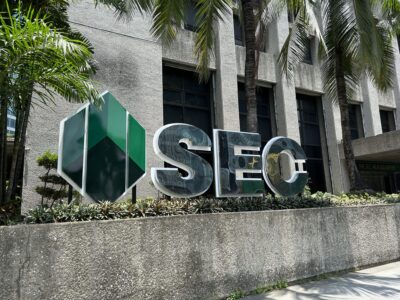
Foreign corporation licensing is a mandatory requirement under Philippine law for foreign entities seeking to conduct business activities within the country. Governed primarily by the Revised Corporation Code (RCC) and the Foreign Investments Act, this process ensures reciprocity, regulatory compliance, and protection of local interests while allowing qualified foreign corporations to operate legally through branches, subsidiaries, or representative offices.
Definition and Scope of Foreign Corporations
Foreign corporations represent entities formed outside the Philippine jurisdiction, yet seeking to engage in local commercial activities. Under Section 140 of the Revised Corporation Code (RA 11232), a foreign corporation qualifies for foreign corporation licensing only if its home country’s laws grant reciprocal rights to Filipino entities, establishing a principle of mutual market access.
This reciprocity clause prevents one-sided operations and promotes fair trade. Eligible foreign corporations include those from jurisdictions like the United States, Singapore, Japan, and EU member states, where Philippine businesses enjoy similar operational freedoms. The SEC rigorously verifies this during the licensing application to safeguard national interests.
The scope extends to corporations, partnerships, and associations intending continuous business engagement, distinguishing them from occasional traders exempt from licensing.
What Constitutes “Doing Business”
The threshold for triggering foreign corporation licensing hinges on whether activities constitute “doing business.” Philippine jurisprudence, guided by the Foreign Investments Act (RA 7042) and RCC, defines this as continuous commercial transactions implying intent to profit locally.
Key indicators include maintaining a local office, appointing resident representatives, soliciting orders through domiciled agents, or conducting management/supervision of Philippine affiliates. Staying over 180 days annually or entering service contracts also qualifies. Isolated acts, like single-equipment sales or property ownership, do not trigger obligations.
Courts apply a holistic test: continuity, regularity, and profit motive. For instance, regular participation in trade fairs or appointing exclusive distributors has led to licensing mandates in past cases, emphasizing the need for proactive SEC consultation for borderline activities.
Types of Foreign Corporate Presence
Foreign entities can establish a presence via several structures, each requiring specific foreign corporation licensing:
An extension of the parent corporation, capable of income generation but not a separate legal entity. Requires an SEC license and USD 200,000 minimum assigned capital (reducible for exporters).
Limited to non-commercial activities like market research or promotion; no local income allowed. Needs USD 30,000 inward remittance and SEC license.
Regional Operating Headquarters (ROHQ)
Provides support services to regional affiliates; tax incentives are available, but local revenue is restricted.
A separate Philippine corporation (often One Person Corporation or regular corporation) with foreign majority ownership, treated as domestic for most purposes but subject to the Foreign Investment Negative List (FINL) restrictions.
Licensing Requirements and Process
The foreign corporation licensing process via the SEC’s eSPARC digital platform demands meticulous preparation.
Essential Documents
Applicants submit:
- Notarized SEC Form F-103 (License Application).
- Apostilled/consularized parent Articles of Incorporation, Bylaws (English translation).
- Home jurisdiction Certificate of Good Standing (not older than 6 months).
- Board Resolution authorizing Philippine operations and resident agent appointment.
- Latest Audited Financial Statements (CPA-certified).
- Resident Agent Affidavit (Filipino citizen or SEC-licensed firm).
- Proof of USD 200,000 (branches) or USD 30,000 (reps) inward remittance.
- Inter-Branch Agreement if multiple branches.
Foreign documents undergo authentication via the Apostille Convention or the Philippine Embassy consularization.
Detailed Application Steps
- Pre-Application Verification: Confirm reciprocity and FINL eligibility via SEC inquiry.
- eSPARC Submission: Upload documents, pay PHP 2,000 filing fee.
- SEC Evaluation: Compliance review (1-4 weeks); respond to queries promptly.
- Fee Payment: 1/5 of 1% authorized capital (min PHP 10,000), plus 1% legal research fee.
- License Issuance: Certificate of Authority to Do Business received digitally/postally.
Total timeline: 4-12 weeks. Post-licensing mandates BIR TIN, LGU permits, and SSS/PhilHealth/Pag-IBIG registration.
Capital Requirements Under FIA
The Foreign Investments Act mandates minimums for majority foreign-owned entities:
- USD 200,000 paid-up capital for domestic market enterprises.
- Reducible to USD 100,000 if employing 50+ Filipinos or using advanced technology.
- No minimum for 70%+ export-oriented activities.
- Retail: PHP 25M minimum per recent liberalization.
Branches require equivalent inward remittance proof.
Taxation of Licensed Foreign Corporations
Tax treatment distinguishes Resident Foreign Corporations (RFCs) from Non-Resident Foreign Corporations (NRFCs).
Resident Foreign Corporations (RFCs)
Licensed entities “engaged in trade or business” (e.g., branches) are RFCs, taxed at 25% on Philippine-sourced net income (CREATE law). Additional liabilities:
- 12% VAT on local sales.
- 15% branch profit remittance tax.
- Withholding taxes on payments.
Non-Resident Foreign Corporations (NRFCs)
Unlicensed entities with Philippine-sourced gross income face 25% final withholding tax (reduced by treaties). No net income deductions.
Tax treaties may lower rates if beneficial ownership is proven.
Ongoing Compliance Obligations
Licensed foreign corporations must maintain good standing through:
- Annual SEC filings: General Information Sheet (GIS), Audited Financial Statements (BIR-stamped).
- Resident agent maintenance for legal service.
- Corporate governance adherence (transparency, anti-corruption).
- BIR tax returns (monthly/quarterly/annual).
- LGU business permits and renewals.
Non-compliance risks license revocation, fines, or deportation orders.
Restrictions and Prohibitions
Foreign corporations face constitutional and statutory limits via FINL:
- Mass media: 100% Filipino-owned.
- Public utilities: Max 40% foreign equity.
- Land ownership: Prohibited.
- Natural resources: 60% Filipino minimum.
The Anti-Dummy Law penalizes ownership circumvention.
Withdrawal and Termination Process
To exit, foreign corporations apply for the SEC license cancellation:
- Affidavit of non-operation/cessation.
- Newspaper publication of intent.
- Proof of settled taxes/liabilities (BIR clearance).
- Final GIS and AFS submission.
SEC issues a Certificate of Withdrawal upon approval.
Judicial Doctrines and Risks
Courts uphold corporate separateness but pierce the veil for fraud. Unlicensed “doing business” voids contracts, exposes to penalties (PHP 10,000-100,000 fines, imprisonment).
Final Insights
Foreign corporation licensing enables market access but demands strict adherence to RCC, FIA, and SEC processes. From document authentication to ongoing filings, compliance ensures operational legitimacy and avoids severe sanctions. Foreign entities should engage local counsel for FINL checks, eSPARC navigation, and tax structuring to thrive in the Philippines.
Need Foreign Corporation Licensing Guidance?
For expert foreign corporation licensing support, consult Triple i Consulting, which specializes in international setups. Contact our team today to connect you with experts who can assist in your journey:
- Contact Us Here
- Fill out the form below
- Call us at: +63 (02) 8540-9623
- Send an email to: info@tripleiconsulting.com