
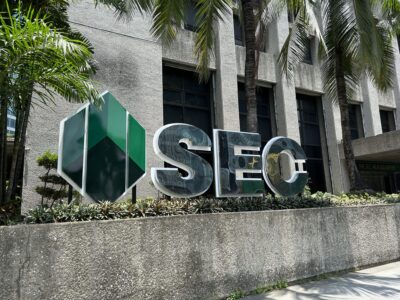
Expanding a commercial enterprise in the Southeast Asian market requires a robust organizational framework that supports institutional investment and mitigates personal liability. Transitioning an existing commercial operation into a domestic corporation in the Philippines allows enterprise owners to secure limited liability protection while establishing a legal structure built for sustainable scaling. Under Philippine jurisprudence, a sole proprietorship possesses no legal personality separate from its individual owner, meaning all commercial debts, contractual liabilities, and operational obligations attach directly to the proprietor’s personal assets. Converting to a stock corporation creates an independent juridical person under the Revised Corporation Code of the Philippines (Republic Act No. 11232), shielding personal wealth, institutionalizing management, and opening pathways to external capital equity.
Strategic Planning and Pre-Incorporation Requirements
Before initiating statutory filings with government regulators, enterprise leaders must execute a thorough structural review to align existing commercial operations with corporate governance standards. Transitioning a sole proprietorship to a corporate structure in the Philippines requires converting a single-owner operation into a multi-shareholder corporate framework that satisfies all national legal requirements. This preliminary planning phase establishes the financial, operational, and managerial parameters that will govern the new entity under the regulatory oversight of the Securities and Exchange Commission (SEC). Proper pre-incorporation planning prevents administrative rejections, eliminates tax friction during asset transfers, and ensures that the business maintains continuity across client accounts, vendor agreements, and commercial leases throughout the transitional period.
- Corporate Name Verification and Reservation: The proposed name for the new entity must be verified through the SEC Electronic Simplified Processing of Application for Registration of Company (eSPARC) system. While a business may have operated for years under a Department of Trade and Industry (DTI) registered business name, SEC approval requires that the corporate name be strictly distinguishable from all currently registered corporate entities in the Philippines and include statutory identifiers such as “Corporation,” “Incorporated,” “Inc.,” or “Corp.”
- Capitalization Framework and Subscription Structure: Enterprise founders must define the authorized capital stock, subscribed capital, and paid-up capital of the incoming corporate entity. Although the Revised Corporation Code eliminated the historical 25%-25% minimum capitalization requirement for standard stock corporations, specific industry sectors remain subject to statutory minimum paid-up capital thresholds mandated by the Foreign Investments Act and secondary regulatory bodies.
- Board of Directors and Executive Officer Composition: A standard stock domestic corporation must appoint between two and fifteen incorporators, the majority of whom must be legally resident in the Philippines. Corporate leadership must officially designate key management roles, including a Board Chairman, a Chief Executive Officer or President, a Corporate Secretary (who must be a citizen of the Philippines), and a Corporate Treasurer (who must be a resident of the Philippines).
- Drafting the Corporate Purpose Clause: The primary purpose clause in the Articles of Incorporation must comprehensively encompass the sole proprietorship’s current commercial activities while providing sufficient operational breadth for future expansion. Secondary purpose clauses must outline complementary commercial activities without violating foreign equity restrictions established in the Regular Foreign Investment Negative List.
- Pre-Incorporation Asset Valuation and Audit: A systematic review of the sole proprietorship’s financial statements is required to determine the exact net book value of all physical assets, inventory, equipment, and accounts receivable. This financial valuation forms the baseline for transferring assets into corporate capital stock without triggering unexpected tax liabilities or miscalculating corporate equity allocations.
SEC Registration and Statutory Document Execution
Securing formal incorporation represents the cornerstone of legal transition, granting the enterprise an independent juridical identity separate from its founders. Completing corporation registration in the Philippines involves preparing, notarizing, and submitting core legal instruments to the SEC for official administrative evaluation and statutory approval. Under modern corporate governance standards, initial corporate applications are processed through centralized electronic portals, yet physical document verification, corporate seal adoption, and legal notarization remain strictly enforced by statutory authorities. Establishing the corporation as a standalone legal entity must occur before transferring existing commercial assets, closing sole proprietorship tax accounts, or renegotiating enterprise contracts.
- Filing Applications via the SEC eSPARC Portal: Corporate founders must input all structural, capital, and organizational details into the SEC eSPARC digital system to initiate processing. This submission begins the formal name reservation, administrative document verification, and official assessment of applicable incorporation fees.
- Drafting and Authentication of Articles of Incorporation: The Articles of Incorporation serve as the legal charter of the enterprise, detailing the official corporate name, primary purpose, principal office location in the Philippines, names and nationalities of incorporators, board composition, and the breakdown of share subscriptions. This document must be formally signed by all incorporators and notarized or authenticated in accordance with Philippine legal standards.
- Formulation and Adoption of Corporate Bylaws: Corporate Bylaws define the company’s internal administrative mechanics and governance rules, establishing procedures for annual stockholder meetings, board elections, director duties, stock transfer procedures, and dividend declarations. Bylaws may be submitted concurrently with the Articles of Incorporation or within thirty days following the formal issuance of the corporate charter.
- Execution of the Treasurer’s Affidavit: The designated Corporate Treasurer must execute a notarized affidavit certifying that the minimum capital subscription has been satisfied and received by the corporation in cash or property for the direct benefit of the legal entity.
- Issuance of the Certificate of Incorporation: Upon formal review, regulatory approval, and payment of statutory registration fees, the SEC issues the official Certificate of Incorporation. This document marks the official birth of the corporate entity as a separate legal person authorized to conduct business throughout the Philippines.
Commercial Asset Migration and Tax Clearance Protocols
Following SEC approval, the business must systematically transfer operational assets, physical properties, and commercial contracts from the sole proprietor to the new corporate entity. Executing the process of converting a sole proprietorship to a corporation in the Philippines involves delicate tax and legal steps, as the owner’s tax identity must be formally separated from the corporation. Because the Bureau of Internal Revenue (BIR) assigns distinct Tax Identification Numbers (TIN) to corporations, all tangible and intangible business assets must be assigned legally, clear of tax liabilities, before the sole proprietorship business registration can be filed.
- Drafting and Executing the Deed of Assignment: Tangible assets, inventory, commercial equipment, real estate, bank balances, and intellectual property owned by the individual proprietor are formally transferred to the corporation via a legal Deed of Assignment. This conveyance document specifies whether assets are being transferred in exchange for corporate stock or for direct financial consideration.
- Securing Bureau of Internal Revenue (BIR) Tax Clearance and CAR: Transferring real property, heavy equipment, or substantial business assets requires filing capital transaction notices with the BIR. The tax authority reviews asset valuations to assess applicable Documentary Stamp Taxes (DST), Capital Gains Tax, or Value-Added Tax (VAT) exemptions under statutory tax-free exchange rules (Section 40(C)(2) of the Tax Code), issuing a Certificate Authorizing Registration (CAR) upon clearance.
- Registration with the Local Revenue District Office (RDO): The newly formed corporation must register with the RDO with jurisdiction over its principal office to secure domestic corporation registration and establish tax compliance status in the Philippines. The enterprise secures its corporate TIN, pays the annual registration fee, registers its corporate books of account, and applies for an Authority to Print (ATP) for official receipts and commercial invoices.
- Local Government Unit (LGU) Business Licensing: The enterprise must secure a new Barangay Clearance and Mayor’s Business Permit from the municipal government where the corporate head office operates. This requires updating local tax declarations, presenting the SEC Certificate of Incorporation, passing health and building inspections, and settling local business taxes.
- Novation of Existing Leases and Commercial Agreements: Existing commercial leases, client agreements, vendor supply contracts, and utility accounts must be formally novated or assigned from the individual proprietor to the corporation. Written notifications and legal amendments must be executed with all institutional partners to ensure continuous legal enforceability.
- DTI Business Name Cancellation and BIR Sole Proprietorship Retirement: Once asset transfers and corporate registrations are finalized, the sole proprietor must file an Affidavit of Cancellation with the DTI to officially retire the business name, alongside a formal notice of closure and tax clearance application with the local BIR district office.
Navigating Legal Complexities with Triple i Consulting
Converting an ongoing enterprise into a corporate structure is a complex regulatory procedure that intersects corporate law, municipal licensing, taxation, and asset valuation rules. Executing SEC registration in the Philippines while simultaneously winding down a sole proprietorship requires precise coordination across multiple government bureaus, where a single filing error can trigger tax penalties or administrative delays. Engaging Triple i Consulting provides business leaders with seasoned legal, tax, and compliance experts who manage every facet of entity restructuring. Attempting to navigate concurrent filings across the SEC, BIR, and local government units without dedicated advisory support exposes business owners to costly operational disruptions and compliance exposures.
- Expert Valuation and Tax-Free Exchange Structuring: Legal and financial strategists at Triple i Consulting structure asset transfers to optimize tax efficiency, preparing detailed inventory schedules and legal documentation required for BIR tax clearances and tax-free share swaps under current Tax Code provisions.
- Multi-Bureau Regulatory Liaison and Coordination: Counsel from Triple i Consulting manages parallel applications across the SEC, BIR, municipal permit offices, and secondary regulatory agencies, preventing operational gaps between corporate birth and functional business readiness.
- Customized Corporate Charter and Bylaw Drafting: Legal professionals at Triple i Consulting draft tailored Articles of Incorporation and Bylaws that ensure proper equity distributions, protect the interests of majority and minority shareholders, and comply with industry-specific regulatory standards.
- Seamless Local Business Permit Acquisition: Advisory experts manage municipal clearance procedures, ensuring that Mayor’s Permits, environmental clearances, and sanitary certificates are smoothly transferred to the corporate entity without disrupting daily commercial sales.
Final Insights
Transitioning an enterprise from a single-owner operation to an institutionalized corporate framework serves as a legal springboard for long-term commercial success. Establishing a domestic corporation in the Philippines entity shields personal wealth through limited liability, instills confidence among institutional clients, and creates a flexible foundation for equity financing. By systematically addressing statutory planning requirements, preparing SEC documentation, and completing tax asset assignments, business owners put their commercial ventures on a solid legal footing. Adhering to structured regulatory protocols ensures the enterprise fully complies with national laws, safeguarding corporate governance while expanding market share across the region.
Is Assistance Available?
Yes, Triple i Consulting provides comprehensive end-to-end regulatory support to ensure your transition to a domestic corporate entity in the Philippines is executed seamlessly, fully compliant, and structured for long-term commercial success. Contact us today to schedule an initial consultation with one of our experts:
- Contact Us Here
- Fill out the form below
- Call us at: +63 (02) 8540-9623
- Send an email to: info@tripleiconsulting.com