
Business Permit Renewal Services in the Philippines
Our corporate compliance team manages the complete mayor’s permit renewal process directly with the local BPLO to keep your company fully legal. We handle the paperwork, fees, and government follow-ups so you can focus entirely on running your business.

Business Registration
Metro Manila Head Office
Address: 20th Floor, Unit 2, BDO Plaza
8737 Paseo de Roxas, Brgy. Bel-Air
Makati City, 1226
Tel: +63 (02) 8540-9623
Email: info@tripleiconsulting.com
Featured Posts

Operating a commercial entity within the Philippine regulatory landscape requires strict adherence to seasonal licensing cycles. For startups, newly registered businesses, sole proprietors, partnerships, and large corporations, renewing a business permit annually is mandatory to maintain legal operating status. The regulatory environment emphasizes strict localized tax compliance, requiring comprehensive data verification across municipal agencies. Navigating the complex requirements of various local government units (LGUs) can overwhelm corporate administrative teams, leading to potential operational pauses. Triple i Consulting provides professional licensing and advisory support, ensuring your business navigates the complete application path without administrative delays. By coordinating directly with the Business Permits and Licensing Office (BPLO), our team streamlines local registration, municipal assessments, and physical facility inspections. Management can confidently direct internal resources toward core revenue-generating operations while maintaining full compliance with local statutory regulations.
Comprehensive Business Permit Renewal Checklist and Requirements
To initiate the annual licensing evaluation at the municipal level, organizations must compile a verified set of corporate records, clearances, and financial declarations. Using a structured business permit renewal checklist helps management verify that no foundational documents are omitted, avoiding unnecessary bureaucratic delays that can disrupt daily commercial workflows. These business permit renewal requirements ensure that the local enterprise complies with updated public safety codes, zoning regulations, and regional taxation metrics for the fiscal cycle. Gathering these business permit renewal documents early protects the organization from the mid-January bottleneck common in highly populated commercial centers. The specific clearances must be acquired sequentially from distinct offices before the city or municipal treasurer evaluates the main application.
- Previous Year Mayor’s Permit: The original copy of the municipal operating license issued during the preceding fiscal year, along with all corresponding validated receipts.
- Barangay Business Clearance: A localized zoning and community clearance secured directly from the specific barangay hall having jurisdiction over the physical commercial facility.
- Certified Financial Declarations: Audited financial statements or official income tax returns from the preceding year, which form the legal basis for calculating local tax liabilities.
- Contract of Lease or Property Title: Legal documentation establishing the right of the enterprise to occupy the declared office space, including updated real property tax receipts if owned.
- Fire Safety Inspection Certificate: An official clearance issued by the Bureau of Fire Protection confirming that the building and office unit comply with national fire safety standards.
- Sanitary and Environmental Clearances: Municipal health certificates for personnel and specific environmental permits tailored to the industry classification of the business.
The Mandatory Local Government Business Permit Renewal Process
Navigating the localized municipal bureaucracy requires a thorough understanding of how to renew business permits in the Philippines to prevent prolonged delays and processing rejections. Successfully executing a business permit renewal in the Philippines involves coordinating with multiple separate offices, balancing local tax requirements with spatial ordinances. For foreign investors, small and medium enterprises (SMEs), and companies opening branches in Metro Manila, navigating this business permit renewal process requires a methodical approach to corporate compliance. Under the digital directives, several municipalities now offer electronic portals, though physical verification and cross-department clearing remain standard practice for complex corporate structures.
- Securing the Barangay Business Permit Renewal: The sequence begins at the local barangay hall, where administrative staff reviews foundational address records to issue a preliminary neighborhood clearance.
- Application Submission at the BPLO: Transmitting the complete folder to the Business Permits and Licensing Office to trigger formal data entry and compliance verification.
- Multi-Department Clearance Routing: Coordinating separate approvals from the engineering office, health department, and zoning board to satisfy municipal structural standards.
- Bureau of Fire Protection Inspection: Arranging the mandatory physical safety assessment to obtain the necessary fire safety certificate.
- Financial Billing and Assessment: Presenting the verified file to the municipal assessor to compute the exact local business tax liabilities.
- Final Release of the License: Completing the entire mayor’s permit renewal cycle by exchanging official payment vouchers for the updated physical permit and validation plate.
Understanding Local Assessment Structures and Business Permit Renewal Fees
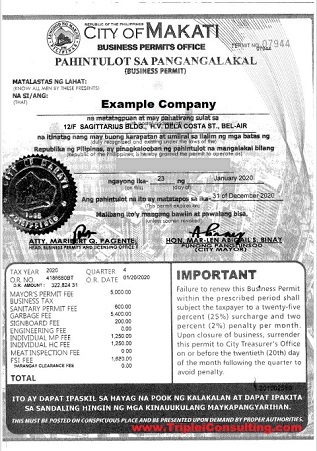
The financial obligation associated with maintaining local operational compliance varies significantly across industries and with gross revenue. Municipal assessors calculate business permit renewal fees based on graduated scales established by the local revenue code of each city or municipality. For corporations and partnerships seeking LGU permits, understanding these computations prevents arbitrary overassessments and enables precise fiscal planning. It is significant to note that under recent national regulatory reforms, local government units retain full statutory authority to levy local business taxes while standardizing administrative processing charges to eliminate redundant costs.
- Local Business Tax Calculation: A percentage-based levy applied directly to the gross sales or receipts derived from the preceding fiscal year, with rates differing for manufacturers, wholesalers, and retailers.
- Mayor’s Permit Fee: A standardized administrative charge assessed by the local government unit for the review and issuance of the municipal operational framework.
- Garbage Collection Fee: A localized utility assessment computed based on the total floor area of the commercial office or the specific environmental footprint of the industry.
- Sanitary Inspection Assessment: Regulatory fees paid to cover the administrative cost of conducting mandatory health and safety inspections at the commercial site.
- Building and Electrical Inspection Charges: Annual technical evaluation fees imposed by the municipal engineering office to certify the structural integrity of the workspace.
- Community Tax Certificate Cost: A corporate tax based on a fixed baseline rate combined with a variable surcharge proportioned to the total assets or revenues of the entity.
Critical Compliance Calendars and the Business Permit Renewal Deadline
Strict adherence to the statutory municipal timeline is a foundational element of sound corporate governance for any enterprise operating in the local market. The official business permit renewal deadline is strictly mandated for January 20th of each calendar year across the vast majority of local government units. Initiating an early LGU business permit renewal shields the organization against localized system crashes or documentation backlogs that often manifest near the legal cutoff date. Preparing your business permit application in the Philippines well in advance ensures that potential corporate registration anomalies are resolved before city offices become crowded.
- Early Documentation Window: Initiating the collection of barangay and internal financial records between October and December to prepare for the immediate January submission.
- The Standard Filing Period: Executing the primary BPLO submission between January 1st and January 20th to secure timely assessment billing.
- Quarterly Payment Options: Utilizing authorized municipal installment structures, which distribute local business tax liabilities across specific due dates in April, July, and October.
- Inspection Compliance Windows: Completing the required physical site visits by health, fire, and structural inspectors within the first quarter of the operational year.
- Branch Alignment Scheduling: Coordinating parallel renewals for companies operating multiple satellite offices across different Metro Manila jurisdictions to ensure uniform compliance.
Mitigation Strategy Against the Severe Business Permit Renewal Penalty
Failing to secure the necessary municipal clearances within the legally prescribed timeframe exposes an organization to immediate financial liabilities and severe administrative sanctions. The statutory business permit renewal penalty framework is designed to enforce strict compliance, making delays highly expensive for startups and established enterprises alike. Business owners unfamiliar with BPLO and LGU requirements must recognize that local authorities have broad discretionary powers to halt commercial operations that fail to renew their licenses. Engaging a professional business permit renewal service helps eliminate these compliance risks, ensuring that all submissions are processed accurately and in full before penalties can accrue.
- Statutory Twenty-Five Percent Surcharge: An immediate, non-negotiable surcharge applied to the total amount of unpaid local business taxes upon missing the official deadline.
- Sustained Monthly Interest Charges: An additional cumulative two percent monthly interest rate is applied to both the base tax amount and associated regulatory fees until full payment is settled.
- Operational Cease-and-Desist Orders: The absolute statutory authority of the local government unit to padlock physical offices and suspend commercial activities for non-compliant entities.
- Banking and Credit Restrictions: Commercial financial institutions frequently freeze or restrict corporate bank accounts if an updated local operating permit is not presented during annual updates.
- Procurement Disqualification: The immediate loss of eligibility to participate in public bidding processes, secure government contracts, or maintain accredited supplier status.
Secure Your Corporate Legality and Ensure Uninterrupted Operations Today
Protect your organization from costly local penalties and administrative delays by entrusting your annual business permit renewal processing in the Philippines to our experienced corporate compliance team. Triple i Consulting provides comprehensive management of the entire application cycle, from initial document verification to final municipal follow-ups across all Metro Manila jurisdictions.
Schedule an initial consultation now through any of the following channels:
- Contact Us Here
- Fill out the form below.
- Call us at: +63 (02) 8540-9623
- Send an email to: info@tripleiconsulting.com