
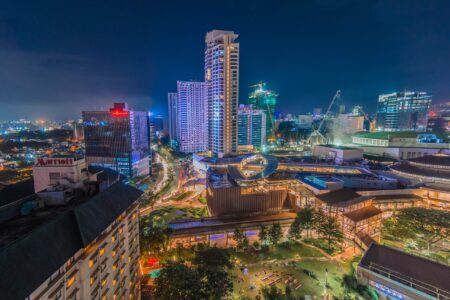
The Philippines’ central business districts are among the primary options for companies that want to operate in high-visibility, well-connected, and professionally managed environments. These areas bring together corporate offices, retail, residential communities, and transport infrastructure in ways that can support both local expansion and regional operations.
While central business districts are not themselves registration agencies or regulators, they are important for understanding where businesses choose to locate, what kinds of permits and incentives are common, and how compliance and operational requirements may differ across cities and regions.
What Are Central Business Districts
Central business districts are the commercial cores of cities where business activity, office space, and economic services are highly concentrated. They typically host corporate headquarters, financial institutions, professional services, retail centers, and mixed-use developments, and they are often supported by strong transport links and utilities.
In the Philippines, these districts are not defined by a single national law, but they are recognized by local planning authorities, developers, and industry groups as the main business hubs within their respective cities. Many central business districts are also home to economic zone offices or special area administrations that coordinate with national agencies on investment, tourism, or industry promotion.
Why Location Matters for Business Setup
Choosing a location within a central business district affects far more than just the address on your business card. It can influence the ease of hiring skilled staff, the availability of reliable power and internet, access to clients and suppliers, and even the type of local government support you may receive.
For foreign and local investors alike, the location also intersects with corporate structuring decisions. For example, a company may register a Philippine corporation with the SEC and the BIR, then choose a central business district location that aligns with its operational needs, such as proximity to clients, access to ports, or talent pools. Location decisions also interact with incentives, zoning rules, and sector-specific permits.
Makati Central Business District
Makati remains the Philippines’ most established financial and corporate hub, and its central business district is anchored along Ayala Avenue and the surrounding blocks. It hosts banks, professional services firms, regional headquarters, and many multinational corporations that require a prestigious address and a mature business ecosystem.
For Triple i Consulting clients, a Makati location is often chosen when the business needs to be close to major financial institutions, law firms, and corporate clients. The area offers a dense concentration of Grade A office towers, high-quality utilities, and strong security, but it also comes with premium rental rates and strict building compliance requirements.
Bonifacio Global City (BGC)
Bonifacio Global City in Taguig is a modern, master-planned central business district known for its wide streets, mixed-use developments, and strong emphasis on lifestyle amenities alongside office space. It is home to many technology companies, BPOs, creative industries, and regional offices that value a contemporary work environment.
BGC is often selected by businesses that want a balance between corporate functionality and a vibrant live-work-play setting. For companies focused on talent attraction, especially younger professionals, BGC’s environment can be a strong advantage. As with Makati, businesses must still comply with local permits, BIR rules, and building standards, but the area’s planning supports a more integrated campus-style setup.
Ortigas Center
Ortigas Center is a major central business district that spans Pasig, Mandaluyong, and Quezon City, and it is one of the largest office markets in Metro Manila. It hosts corporate offices, shopping malls, hotels, and residential towers, making it a key commercial and retail hub in the eastern part of the metropolis.
For many businesses, Ortigas offers a strategic middle ground between Makati and BGC in terms of cost, accessibility, and tenant mix. It is particularly attractive to companies that need to be close to the east side of Metro Manila, including Rizal province, while still maintaining a strong corporate presence. The area also has a well-developed transport network, including MRT and major road access.
Bay City and MOA Complex
Bay City, covering parts of Pasay and Parañaque, is a rapidly growing central business district that includes the Mall of Asia Complex and the Entertainment City zone. It combines large-scale retail, hospitality, gaming, and office developments along the Manila Bay waterfront.
This area is especially relevant for businesses in hospitality, entertainment, retail, and related services, as well as companies that want to be near the airport and major hotels. The Bay City central business districts also intersect with Tourism Infrastructure and Economic Zone Authority (TIEZA) projects, which can affect incentives and permitting for qualified Tourism Enterprises.
Alabang and Filinvest Corporate City
Alabang, in Muntinlupa City, is the main central business district in the south of Metro Manila, with Filinvest Corporate City and Madrigal Business Park as key nodes. It is known for its planned layout, green spaces, and a mix of corporate, residential, educational, and leisure facilities.
For companies that want to tap into the southern labor market or serve clients in Cavite and Laguna, Alabang offers a strong alternative to the more congested inner-city districts. It is also a popular choice for shared services, back-office operations, and regional hubs that do not need to be in the immediate Makati-BGC-Ortigas triangle.
Quezon City Districts: Eastwood and Triangle Park
Quezon City hosts several central business districts, including Eastwood City in Libis and the Triangle Park area in the North Triangle. Eastwood is known for its cyberpark setup and strong BPO presence, while Triangle Park is a newer, fast-growing district with corporate, retail, and healthcare developments.
These areas are attractive to companies that want to be in the northern part of Metro Manila, close to Quezon City, San Juan, and nearby provinces. They also offer a range of office grades and price points, making them suitable for both large corporations and growing mid-market firms. Compliance requirements follow the same national framework, but local ordinances and zoning rules are specific to Quezon City.
Cebu Business Park and IT Park
Outside Metro Manila, Cebu’s Business Park and IT Park are among the most prominent central business districts in the Visayas. They host BPOs, IT companies, corporate offices, retail, and hospitality developments, and are supported by strong local government and economic zone initiatives.
For businesses targeting the Visayas and Mindanao markets, Cebu’s central business districts provide a strategic base with international airport access, a deep seaport, and a large talent pool. Companies setting up here still need to register with the SEC and BIR, but the local ecosystem is geared toward export-oriented and technology-driven industries.
Clark, Iloilo, Davao, and Other Regional CBDs
Other important central business districts include Clark Freeport Zone in Pampanga, Iloilo Business Park in Western Visayas, and the Poblacion and Lanang districts in Davao City. These areas are part of broader economic development strategies that link local planning with national investment priorities.
Clark benefits from its freeport status and proximity to the international airport, making it attractive for logistics, manufacturing support, and aviation-related services. Iloilo and Davao central business districts serve as regional hubs for their respective islands, with growing office markets and improving infrastructure. Companies expanding beyond Metro Manila often evaluate these locations for cost advantages, talent availability, and long-term growth potential.
Incentives and Economic Zones
Many central business districts overlap with or are near economic zones administered by agencies such as PEZA, BOI, CDC, and TIEZA. These zones can offer tax incentives, streamlined permitting, and other support to qualified businesses, especially in export-oriented, IT-BPO, tourism, and priority industries.
While incentives are granted at the national level based on specific programs, the choice of a central business district location often determines which zone offices are accessible and what types of support are available. For Triple i Consulting clients, this means that location decisions must be coordinated with corporate structuring, incentive applications, and ongoing compliance requirements.
Compliance and Operational Considerations
Operating in a central business district does not remove the need for standard business registrations and permits. Companies must still secure SEC registration, BIR registration, mayor’s permits, barangay clearances, and other local requirements. They must also comply with building rules, fire safety standards, and, where applicable, economic zone regulations.
The advantage of a central business district location is that many of these requirements are well understood by local authorities, building managements, and service providers. Developers and property managers often have established processes for coordinating with city halls, BIR offices, and other agencies, which can help streamline setup and ongoing compliance.
Practical Checklist for Choosing a CBD
When evaluating central business districts, clients should consider the following:
- Alignment with the target market and client base.
- Availability of skilled talent and commuting options.
- Office quality, utilities, and IT infrastructure.
- Rental costs versus long-term growth plans.
- Proximity to relevant economic zones and incentive programs.
- Local government support and permitting efficiency.
A well-chosen central business district location can become a strong foundation for a company’s Philippine operations, supporting both day-to-day performance and long-term strategic goals.
Wrapping Up
Selecting the right central business district is a strategic decision that goes beyond finding premium office space—it directly impacts talent access, operational efficiency, brand visibility, and long-term scalability. For businesses expanding into the Philippines, aligning location choices with corporate structure, incentive eligibility, and compliance requirements ensures a stronger foundation for sustainable growth.
Whether you are establishing your first Philippine office or expanding to regional hubs like Cebu, Clark, or Davao, the right central business district partnership can accelerate your market entry while minimizing regulatory risks.
Reach Out for Assistance
Triple i Consulting assists clients in aligning their location strategy with corporate registration, tax, and compliance needs. This includes helping companies choose the right central business districts based on their industry, talent requirements, and long-term plans, and ensuring that business setup steps are completed correctly for the chosen address.
We also support clients in coordinating with local government units, understanding permit requirements, and maintaining compliance as their operations grow. For businesses considering multiple locations or regional expansion, our team can help evaluate the regulatory and operational implications of each central business district option:
- Contact Us Here
- Fill out the form below
- Call us at: +63 (02) 8540-9623
- Send an email to: info@tripleiconsulting.com