
Expanding commercial operations into the Southeast Asian market offers significant growth opportunities for domestic entrepreneurs and international corporations alike. Executing a successful expansion requires a clear operational blueprint detailing how to register a company in the Philippines with a mixed composition of Filipino and foreign stockholders. By establishing the appropriate corporate structure, meeting initial capitalization requirements, and complying with local regulatory mandates, corporate leaders can create a legally compliant entity positioned for long-term commercial growth.
Legal Framework and Foreign Ownership Restrictions
Establishing a corporate entity in the Philippines requires strict adherence to the statutory framework governing commercial enterprises, primarily codified under Republic Act No. 11232, otherwise known as the Revised Corporation Code of the Philippines, and Republic Act No. 7042, or the Foreign Investments Act of 1991 (as amended by Republic Act No. 11535). Foreign ownership in the Philippines is subject to specific regulatory thresholds designed to balance foreign direct investment with the protection of domestic industries. Investors must evaluate the specific nature of their business activities against the current Foreign Investment Negative List (FINL) to determine the permitted equity participation percentages before initiating corporate formation.
- The 60-40 Equity Structure Rule: Under standard statutory provisions, domestic market enterprises that do not meet minimum foreign capital investment thresholds are subject to equity limitations. In these instances, foreign investors may hold up to 40 percent of the outstanding voting capital stock. In comparison, the remaining 60 percent must be owned by Filipino citizens or entities wholly owned by Philippine nationals. This structure is mandated for business sectors involved in land ownership, defense-related activities, public utility operations, and specific commercial activities specified by national policy.
- 100 Percent Foreign-Owned Enterprises: Under the Foreign Investments Act, foreign investors can acquire up to 100 percent of the equity in domestic market enterprises, provided the company is established with a minimum paid-up capital of USD 200,000. This threshold can be reduced to USD 100,000 if the enterprise incorporates advanced technology as certified by the Department of Science and Technology, or directly employs at least 50 full-time Philippine residents. Export-oriented enterprises—defined as companies exporting at least 60 percent of their total output—are generally exempt from domestic capital equity restrictions and may also be 100 percent foreign-owned regardless of initial capital size.
- Anti-Dummy Law Compliance: Commercial organizations involving foreign equity must comply with Commonwealth Act No. 108, commonly known as the Anti-Dummy Law. This statute imposes severe penalties on foreign investors and local nominees who attempt to circumvent constitutional equity limitations through unrecorded side agreements, nominee arrangements, or management contracts. Transparent corporate governance structures, legitimate share subscription agreements, and clear equity ownership documentation are essential for maintaining full legal compliance.
- Directorship and Incorporator Requirements: The Revised Corporation Code permits anywhere between two and fifteen incorporators, all of whom must be natural persons holding at least one share of voting stock. While non-resident foreign nationals can serve as corporate directors in proportion to their foreign equity holdings, specific corporate officer roles are subject to strict residency requirements. The Corporate Secretary must be a citizen and resident of the Philippines, and the Corporate Treasurer must be a resident of the country, ensuring local accountability for corporate governance and statutory filings.
Step-by-Step SEC Registration Process for Foreign and Local Stockholders
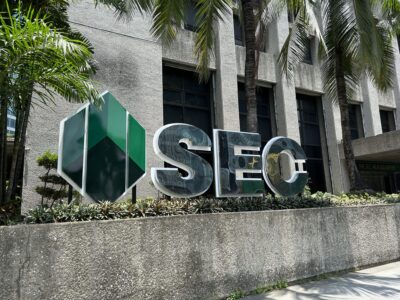
Securing official incorporation requires formal interaction with the Securities and Exchange Commission (SEC), the primary corporate regulator in the Philippines. The SEC registration in the Philippines establishes the entity’s legal personality, enabling the corporation to enter into contracts, acquire assets, open corporate bank accounts, and conduct commercial business. Completing this stage efficiently requires preparing and verifying statutory documents executed by both local and foreign stockholders.
- Corporate Name Reservation: The initial administrative phase involves reserving and verifying the proposed corporate name using the SEC Electronic Simplified Processing System for Application to Register Corporations (eSPARC). The selected name must be unique, distinguishable from existing entities, and compliant with national naming guidelines. It should reflect the corporate identity while avoiding restricted terminology unless prior regulatory approval has been secured from the appropriate government monitoring authorities.
- Drafting Corporate Articles and By-Laws: Incorporators must prepare the Articles of Incorporation and Corporate By-Laws, setting forth the corporate name, specific business purposes, the principal office address within the Philippines, details of the original incorporators, a directory of directors, and the authorized capital stock structure. The documentation must clearly distinguish between common and preferred shares, voting rights, and special provisions governing foreign equity transfers to ensure that long-term corporate control aligns with the founders’ initial intentions.
- Filing SEC Form F-101 or Form F-102: For corporate entities incorporating foreign stock ownership, applicants must submit specific supplementary documentation under the Foreign Investments Act. SEC Form F-101 is required for foreign corporations establishing branches or representative offices, while Form F-102 applies to domestic corporations seeking registration with foreign equity participation exceeding 40 percent. These forms capture financial declarations, details on ultimate beneficial ownership, and formal operational commitments.
- Proof of Foreign Inward Remittance: Foreign stockholders investing equity into a Philippine company must provide verified proof of inward remittance of foreign exchange. This requirement is validated through a Bank Certificate of Inward Remittance issued by an authorized agent bank in the Philippines. This documentation serves as formal proof that the foreign capital required under statutory rules was legitimately transferred through official banking channels into the domestic economy.
- Execution of Consularized and Apostilled Documents: All legal documentation executed outside the Philippines by foreign incorporators, directors, or corporate shareholders—such as powers of attorney, board resolutions, corporate registration certificates, and financial statements—must undergo legalization. Foreign execution requires apostillation in countries that are signatories to the Hague Apostille Convention, or consular legalization by the Philippine Embassy or Consulate in non-signatory jurisdictions, before official SEC submission.
- Issuance of the Certificate of Incorporation: Upon review and acceptance of all physical and electronic filings, alongside payment of statutory filing fees based on authorized capital stock, the SEC issues the official Certificate of Incorporation. This document marks the official birth of the corporate entity and serves as the foundational proof required for secondary licensing and local government clearance.
Local Government and Tax Registration Requirements
Securing an SEC Certificate of Incorporation is the initial step in completing business registration in the Philippines. To legally operate a physical or commercial presence, corporations must complete post-incorporation procedures with local government units (LGUs) and national tax authorities. Skipping these secondary registration workflows exposes organizations to significant administrative fines, operational closures, and legal sanctions.
- Obtaining Barangay Clearance: Before submitting applications to municipal authorities, the corporation must obtain a Barangay Clearance from the local village or barangay district where the company’s principal office is located. This clearance verifies that the commercial enterprise complies with local community standards and zoning ordinances.
- Securing the Mayor’s Business Permit: Companies must apply for a Mayor’s Permit or Business Permit from the LGU having territorial jurisdiction over the office location. This process involves multiple site inspections and clearances, including the Zoning Certificate, Sanitary Permit, Environmental Clearance, and the Fire Safety Inspection Certificate issued by the Bureau of Fire Protection. LGUs assess local business taxes and regulatory fees annually based on authorized capital and leased square footage.
- Registering with the Bureau of Internal Revenue (BIR): Tax registration requires filing BIR Form 1903 at the Revenue District Office (RDO) possessing jurisdiction over the principal corporate address. The corporation must register its corporate books of accounts, obtain the BIR Certificate of Registration (Form 2303), secure approval for official invoices or receipts through an Authority to Print (ATP), and register corporate tax types, including Corporate Income Tax, Value-Added Tax (VAT) or Percentage Tax, and Withholding Taxes.
- Registration with Mandatory Social Agencies: All registered corporations must enroll as employers with statutory social benefit agencies regardless of immediate hiring timelines. This includes obtaining employer registration numbers from the Social Security System (SSS) for retirement and disability benefits, the Philippine Health Insurance Corporation (PhilHealth) for medical coverage, and the Home Development Mutual Fund (Pag-IBIG Fund) for housing benefits.
- Central Bank (BSP) Registration for Capital Repatriation: Foreign stockholders intending to repatriate profits, dividends, or capital back to their home country must register their foreign direct investment with the Bangko Sentral ng Pilipinas (BSP) or an authorized agent bank. Obtaining a Banko Sentral Registration Document (BSRD) ensures the legal right to purchase foreign currency from the Philippine banking system for future dividend outflows and capital remittance.
Navigating Compliance Complexity and Seeking Professional Guidance
Completing company registration in the Philippines presents complex administrative hurdles that require specialized local regulatory knowledge. The registration process involves multi-agency coordination, stringent document legalization standards, precise capital verification protocols, and evolving statutory requirements under the Foreign Investments Act. Managing these intersecting procedures independently often leads to procedural friction, extended setup timelines, and costly corporate restructuring.
- Inter-Agency Coordination Friction: The incorporation process requires sequential filings with multiple government bodies, including the SEC, local LGUs, the BIR, and statutory social benefit agencies. Unaligned filing details, minor discrepancies in corporate names, or conflicting business activity classifications across these agencies can stall registration progress for months.
- Complex Capital Remittance and Proof Standards: Verifying foreign capital transfers demands meticulous coordination with local authorized agent banks to secure valid Bank Certificates of Inward Remittance. Misinterpreting minimum capital thresholds under domestic investment laws can result in application rejections or require costly capital adjustments after incorporation filings have commenced.
- Strict Legal Formatting and Apostille Execution: Foreign corporate documentation must strictly comply with Philippine evidentiary standards. Rejections frequently occur when foreign corporate charters, board resolutions, or stockholder affidavits lack required apostille certifications or contain subtle language variations that conflict with the Revised Corporation Code.
- Regulatory Compliance and Penalties: Operating a corporate entity without full post-incorporation compliance exposes board directors and major shareholders to substantial tax penalties, LGU closure orders, and administrative fines. Ensuring that every regulatory requirement is met correctly from inception safeguards the corporate entity against early financial liability.
- The Value of Seeking Expert Professional Guidance: Given the systemic bureaucratic challenges, seeking professional assistance is a vital strategy for investors evaluating how to register a business in the Philippines efficiently. Triple i Consulting offers complete end-to-end corporate advisory services, managing every stage of entity structuring, document drafting, SEC registration, and local tax compliance. Working with a dedicated corporate consulting firm eliminates administrative bottlenecks and ensures your business achieves full legal validity without costly delays.
Final Thoughts
Establishing a commercial corporation in the Philippines provides investors with direct access to a dynamic and rapidly growing Southeast Asian market. Learning how to register a company in the Philippines enables international and local founders to establish an effective business structure, secure equity distributions, and fulfill statutory obligations across all participating agency levels. By approaching incorporation with strategic legal preparation and clear regulatory alignment, companies position themselves for long-term operational success and commercial resilience.
Is Assistance Available?
Yes, Triple i Consulting can help streamline every phase of registering a company in the Philippines to ensure full statutory compliance and a seamless corporate setup. Contact us today to schedule an initial consultation with one of our experts:
- Contact Us Here
- Fill out the form below
- Call us at: +63 (02) 8540-9623
- Send an email to: info@tripleiconsulting.com