
The macroeconomic landscape of the Philippines presents a compelling narrative for foreign investors and local enterprises seeking long-term growth, driven by robust domestic consumption, significant infrastructure development, and a highly competitive, English-proficient workforce. However, establishing a formal commercial presence requires navigating a unique regulatory framework in which corporate legitimacy is not granted by a single centralized authority but rather through a sequential, multi-layered clearance system distributed among national and local government units. Establishing a regular domestic corporation or branch office requires a comprehensive strategy to manage the intersecting jurisdictions of federal regulators, local municipal offices, and national tax authorities. For organizations planning market entry, learning the mechanics of this structured, multi-agency environment is essential to ensuring full operational compliance, avoiding severe financial penalties, and securing a sustainable operational footprint.
Why Business Registration Requires Multiple Agencies in the Local Market
The decentralized structure governing company registration in the Philippines is a deliberate regulatory framework that balances national economic oversight, localized municipal governance, and comprehensive tax administration. This division of labor ensures that, while a company may have the legal capacity to exist as a corporate entity at the national level, its physical operations must align with localized zoning, safety, and community standards, and state revenue bodies transparently capture its fiscal contributions.
- Separation of Legal Existence and Operational Authority: National agencies evaluate corporate structures, capital sufficiency, and shareholder compliance, whereas local government units assess the commercial enterprise’s physical impact on the immediate community, infrastructure, and environment.
- Decentralized Fiscal Collection: The framework divides fiscal governance between national internal revenue collection, which funds federal public services, and local municipal taxation, which directly sustains municipal infrastructure and localized public safety programs.
- Enforcement of Specialized Regulatory Mandates: Distinct business registration agencies are legally tasked with specialized oversight, ensuring that a singular bureaucratic entity does not become overwhelmed by attempting to evaluate legal, environmental, spatial, and fiscal compliance simultaneously.
- Zoning and Public Safety Management: Localized screening prevents industrial or high-risk commercial operations from establishing a presence in designated residential zones, ensuring that structural, fire, and health and sanitation codes are strictly maintained.
This multi-tiered architectural arrangement means that corporate establishment cannot be executed as a single, isolated transaction. Instead, the business registration process operates as a cascading series of administrative validations, in which the outputs and certificates of one state institution serve as mandatory legal prerequisites for initiating applications with the next.
The Primary Corporate Framework: SEC Registration in the Philippines
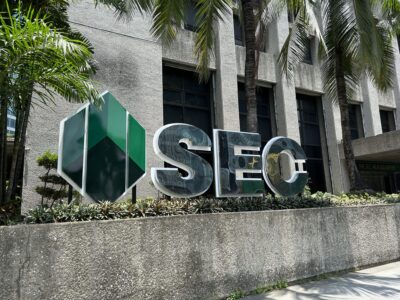
For commercial enterprises, regular domestic corporations, and foreign-owned subsidiaries, the formal business registration process initiates at the national level with the Securities and Exchange Commission (SEC). The SEC functions as the gatekeeper of corporate life, evaluating the entity’s foundational structure, verifying equity distributions, validating compliance with securities laws, and ensuring that the corporate name adheres to strict statutory standards.
- Name Verification and Reservation: The initial step is to use the SEC’s digital portal to ensure the proposed corporate title is distinctive, does not infringe on existing trademarks, and complies with nomenclature guidelines.
- Execution of Foundational Corporate Documents: Corporations must draft and execute formal Articles of Incorporation and Bylaws that detail the primary and secondary corporate purposes, the principal office address, the identities of the incorporators, and the designated corporate directors.
- Capitalization Verification: Regulators review the enterprise’s financial architecture, verifying that the authorized, subscribed, and paid-in capital meets the legal minimums mandated for specific industries, particularly those with foreign equity components.
- Issuance of the Certificate of Incorporation: Upon successful review of all business registration requirements, the SEC issues the formal Certificate of Incorporation, thereby legally bringing the corporate entity into existence and endowing it with a distinct juridical personality.
While standard multi-shareholder corporate structures must obtain SEC registration in the Philippines, it is worth noting that individual traders use DTI business registration solely to secure exclusive rights to a trade name, highlighting how the nature of the entity dictates the specific entry point into the regulatory pipeline. Once the SEC issues the Certificate of Incorporation, the newly formed entity has the legal capacity to contract and hold property. However, it still lacks the legal authority to open its doors to the public or commence commercial trade until it satisfies local municipal licensing requirements.
Local Government Compliance: Securing a Barangay Business Clearance and Mayor’s Permit
Following national incorporation, an enterprise must focus on the specific Local Government Unit (LGU) where its physical office, facility, or commercial headquarters is located. Under the Local Government Code of 1991, municipal authorities have autonomous jurisdiction over the regulation of commercial activities within their boundaries, requiring companies to obtain a local business permit in the Philippines before commencing operations.
- Locating the Primary Corporate Office: Enterprises must secure a valid commercial lease or property title in a zone properly designated for corporate operations; residential or non-compliant addresses will result in immediate administrative rejection.
- Acquiring the Barangay Business Clearance: The initial localized step requires submitting the SEC documentation to the specific local barangay—the smallest administrative division in the country—to obtain a localized clearance certifying that the local community neighborhood raises no zoning or operational objections to the business.
- Procuring Auxiliary Clearances: Before the final municipal license can be granted, the applicant must successfully pass inspections by secondary departments, resulting in the issuance of a Fire Safety Inspection Certificate, a Sanitary Permit, and an official Zoning Clearance.
- Issuance of the Mayor’s Permit in the Philippines: Once all required peripheral local clearances, real property tax validations, and environmental certificates are obtained, the municipal hall processes the application to issue the formal Mayor’s Permit, which serves as the definitive operational license for that municipality.
The localized phase of company registration in the Philippines underscores why business registration requires multiple agencies: an SEC certificate proves a company is legally organized, but only the Mayor’s Permit confirms the company is physically safe and structurally permitted to operate in its chosen location. Delays during this stage frequently stem from unexpected zoning discrepancies, building code mismatches, or incomplete historical documentation regarding the chosen commercial property, requiring meticulous due diligence during the site selection process.
Tax Registration and Finalization: BIR Business Registration and Professional Guidance
The final critical phase of the foundational registration pipeline moves back to the national level, focusing on fiscal compliance with the Bureau of Internal Revenue (BIR). Every corporate entity must register with the BIR to secure its unique Corporate Taxpayer Identification Number (TIN), formalize its corporate tax types, register its official books of accounts, and obtain authorization to issue legally binding commercial receipts.
- Determination of Tax Jurisdiction: The corporate entity must file its application with the specific Revenue District Office (RDO) that holds territorial jurisdiction over the physical address listed in the Mayor’s Permit.
- Securing the Certificate of Registration (COR): The BIR issues Form 2303, the official Certificate of Registration, which clearly outlines the corporation’s tax obligations, including corporate income tax, withholding taxes, value-added tax (VAT), and documentary stamp tax.
- Registration of Official Books of Accounts: Corporations are legally required to present and register their accounting ledgers, journals, and financial record books with the RDO to ensure future tax audits can be conducted against validated, stamped corporate documents.
- Authority to Print (ATP) Official Receipts: The enterprise must secure an official Authority to Print, allowing a BIR-accredited printing press to produce the numbered corporate receipts and commercial invoices required for every lawful B2B and B2C transaction in the country.
The cascading dependencies of this entire ecosystem illustrate why corporate setup is widely recognized as an intricate, bureaucratic labyrinth. You cannot obtain a BIR Certificate of Registration without presenting a valid Mayor’s Permit, you cannot secure a Mayor’s Permit without a Barangay Business Clearance, and you cannot apply for local clearances without an SEC Certificate of Incorporation.
Because the overlapping timelines, strict document formatting, and sequential agency requirements are highly complex, navigating these steps to register a business in the Philippines without professional intervention often results in administrative gridlock, costly operational delays, and unintended non-compliance. Given that error-free execution requires consistent, daily management across multiple national and municipal bureaus, utilizing a specialized firm to manage your company registration in the Philippines is an essential strategic decision. Triple i Consulting is a highly trusted provider of corporate establishment, licensing, and regulatory compliance services, offering the technical expertise and direct agency insight required to transition your organization smoothly from initial application to full commercial activation.
Key Takeaways
Successfully navigating business registration in the Philippines requires viewing the multi-agency process not as an administrative obstacle, but as a structured, sequential framework designed to validate corporate legitimacy, local safety, and fiscal transparency. By carefully managing the distinct requirements of the Securities and Exchange Commission, local municipal authorities, and the Bureau of Internal Revenue, an enterprise establishes a compliant foundation that supports long-term commercial success and mitigates future regulatory risks. While the decentralized architecture of local corporate setup demands meticulous attention to detail and significant administrative coordination, the economic rewards of establishing a secure, fully licensed presence in this vibrant, expanding market remain exceptionally high. Partnering with experienced corporate compliance professionals allows global organizations and local entrepreneurs to bypass common bureaucratic pitfalls, optimize their deployment capital, and accelerate their operational timelines.
Is Assistance Available?
Yes, Triple i Consulting provides comprehensive, end-to-end corporate registration and regulatory compliance services to ensure your business is properly established with all national and local government agencies. Our team of legal and tax specialists manages the entire administrative process, allowing your executive leadership to focus entirely on market strategy and commercial growth. Contact us today to schedule an initial consultation with one of our experts:
- Contact Us Here
- Fill out the form below
- Call us at: +63 (02) 8540-9623
- Send an email to: info@tripleiconsulting.com