Managing annual business permit renewals across an expanding network of corporate branches presents significant operational, financial, and legal complexities for enterprise organizations operating in the Philippines. Every January, corporate compliance departments, legal teams, and operational leaders face the daunting task of coordinating simultaneous filings across dozens of distinct Local Government Units (LGUs), each operating under its own municipal revenue code, localized regulatory standards, administrative schedules, and localized payment channels. Failing to execute this annual compliance cycle with precision risks immediate monetary surcharges, steep interest penalties, operational bottlenecks, and potential temporary closure orders that directly jeopardize corporate revenues and corporate standing. Establishing a standardized administrative framework, implementing robust document controls, maintaining centralized compliance oversight, and leveraging professional corporate support allows multi-branch corporations to maintain seamless regulatory status, safeguard institutional continuity, and eliminate administrative friction across all commercial locations nationwide.
Governance Frameworks for Managing Business Permit Renewals Across Multiple Sites
Executing a seamless annual compliance campaign across a geographically distributed branch network requires an overarching corporate governance model. Multi-site enterprises must transition away from decentralized, branch-led filings and implement a structured workflow that synchronizes administrative tasks across diverse municipal jurisdictions well before local deadlines arrive.
- Establish a Centralized Compliance Repository: Create a secure, cloud-based repository to store all historical Mayor’s permits, official tax receipts, BIR registrations, real property tax clearances, and gross sales filings for every operating location.
- Construct a Municipal LGU Matrix: Maintain a dynamic tracking matrix documenting specific LGU submission deadlines, grace periods, local tax rates, required site clearances, and payment methods for all relevant cities and municipalities.
- Standardize Branch-Level Preparation Protocols: Develop uniform preparation guidelines for local branch managers, outlining exact schedules for gathering site-specific requirements such as barangay clearances, sanitary approvals, and local occupancy documents.
- Implement Centralized Project Management Systems: Deploy real-time tracking dashboards to monitor every stage of the business permit renewal process across multiple branches, ensuring visibility from initial document collection through assessment, payment, and final permit issuance.
- Establish Internal Quality Control Audits: Perform thorough pre-submission reviews of all branch gross sales declarations and financial statements to prevent reporting discrepancies that could trigger municipal tax audits or assessment delays.
- Define Clear Escalation Paths: Set up structured internal escalation channels so that administrative delays, local tax disputes, or missing documents or errors are immediately flagged to central legal and financial officers for quick resolution.
Essential Requirements for Business Permit Renewal in the Philippines
Fulfilling mandatory documentary standards across all operating jurisdictions forms the bedrock of the annual clearance cycle. Enterprise corporations must assemble complete, accurate, and properly authenticated legal and financial records to satisfy municipal assessors across varying LGUs.
- Corporate Legal and Governance Documents: Compile current SEC Certificates of Incorporation, updated Articles of Incorporation, By-Laws, and the most recent General Information Sheet (GIS) stamped by the Securities and Exchange Commission.
- Financial Records and Gross Sales Verification: Prepare audited financial statements, annual income tax returns (BIR Form 1702), monthly or quarterly VAT/percentage tax returns, and detailed, itemized schedules of gross sales by individual branch location.
- Real Estate and Location Approvals: Secure fully executed, unexpired lease contracts or land titles for each commercial space, accompanied by current Real Property Tax (RPT) clearances for both the building and land.
- Barangay and Local Municipal Clearances: Obtain original Barangay Business Clearances for the current calendar year from the specific barangay having jurisdiction over each branch address.
- Mandatory Regulatory Ancillary Clearances: Gather all secondary site-specific permits, including Fire Safety Inspection Certificates (FSIC), Sanitary Permits, Environmental Clearances, Zoning Clearances, and local engineering or building inspection approvals.
- Comprehensive Public Liability and Employee Safety Approvals: Provide current public liability insurance policies, comprehensive safety certifications, and occupational health documentation required by specific municipal health and building offices.
Step-by-Step Execution of the Business Permit Renewal Process
Following a structured, step-by-step methodology ensures that corporate compliance teams navigate municipal bureaucracies efficiently, eliminating unnecessary processing delays and administrative back-and-forth with local assessors.
- Phase 1: Pre-Assessment Consolidation and Verification: Gather all localized clearances, lease records, and site-specific financial reports to accurately calculate the declared gross receipts attributable to each specific branch location.
- Phase 2: Formal Application Submission: File complete application dossiers, along with all mandatory supporting clearances and tax returns, at the Business Permits and Licensing Office (BPLO) or designated one-stop shop of each target LGU.
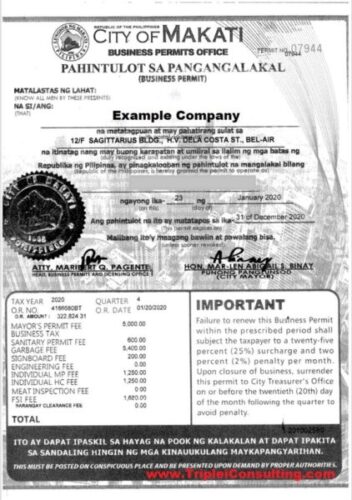
- Phase 3: Tax Assessment and Verification: Review the official Tax Order of Payment (TOP) issued by the City or Municipal Treasurer to verify the mathematical accuracy of local business taxes, regulatory fees, and garbage charges assessed.
- Phase 4: Settlement of Local Taxes and Fees: Process payments through authorized municipal bank branches, official LGU online payment portals, or directly at city treasury counters to obtain Official Receipts (OR).
- Phase 5: Final Inspection and Permit Release: Complete mandatory post-payment inspections conducted by health, building, and fire authorities to receive the signed Mayor’s Permit, official business plate, and regulatory stickers.
- Phase 6: Verification and Central Archiving: Verify all information printed on issued permits for typographical accuracy and classification accuracy before scanning and archiving the documents in the corporate digital database.
Operational Challenges in Executing Business Permit Renewals for Branch Networks
Managing simultaneous compliance filings across nationwide branch networks poses unique administrative, logistical, and legal hurdles for enterprise corporations. Recognizing these systemic obstacles enables compliance directors to build resilient risk mitigation strategies.
- Disparate Municipal Tax Codes and Interpretations: Navigating conflicting local tax structures, varying tax rates on gross sales, and differing interpretations of local revenue codes across dozens of autonomous Philippine LGUs.
- Uneven Digital Infrastructure Across LGUs: Balancing highly automated, online BPLO portals in major metropolitan centers with manual, paper-heavy processing counters in rural or provincial municipalities.
- Local Branch Administrative Bottlenecks: Managing delays caused by local branch staff who lack formal compliance training, leading to missed deadlines for mandatory site clearances like Fire Safety or Sanitary Permits.
- Arbitrary Tax Assessments and Discrepancies: Resolving sudden, unexpected tax increases, inflated gross sales estimations, or unwarranted regulatory fees levied by municipal assessors during peak processing periods.
- Logistical Strain and Resource Depletion: Overburdening internal legal and administrative personnel who must physically visit multiple city halls nationwide, leading to operational fatigue and increased risk of oversight.
- Unannounced Policy and Ordinance Changes: Adapting quickly to last-minute changes in local executive orders, local tax ordinance revisions, or newly mandated local clearance requirements passed right before the annual renewal period begins.
Strategic Advantages of Outsourcing Compliance to Triple i Consulting
Navigating multi-branch municipal compliance demands specialized regulatory expertise, extensive administrative resources, and active ground representation across Philippine LGUs. The intricacies of dealing with disparate local revenue codes, localized inspection requirements, and varying administrative timelines make the process highly complex and demanding for internal teams to handle on their own. Partnering with Triple i Consulting as a trusted corporate service provider simplifies this complicated administrative workload, mitigates regulatory exposure, and guarantees seamless operational continuity across all commercial sites nationwide.
- Nationwide Ground Capability and Local Representation: Mobilizing experienced regulatory specialists who maintain direct, professional relationships with BPLO officials, city treasuries, and fire departments across the Philippines.
- Centralized Single-Point Account Management: Eliminating administrative overhead by consolidating multi-city permit processing through a single, dedicated corporate consultancy account with clear progress tracking.
- Expert Tax Assessment Verification: Reviewing LGU Tax Orders of Payment (TOP) to audit calculations against governing local revenue codes, successfully disputing unwarranted surges or erroneous charges.
- Risk Reduction and Comprehensive Workflow Management: Mitigating exposure to late-filing surcharges, interest penalties, and potential business disruption through rigorous timeline monitoring and structured document management.
- Tailored Enterprise Solutions: Designing customized compliance frameworks that cater specifically to the scale, geographical distribution, and unique operational needs of multi-site corporations.
- Complete End-to-End Execution: Handling every phase of the process—from early document verification and localized submission to handling tax payments and physical permit delivery—ensuring zero operational impact on internal staff.
Post-Renewal Protocols and Continuous Compliance Best Practices
Maintaining complete legal compliance extends beyond the traditional January renewal window. Enterprise organizations must implement ongoing compliance protocols to ensure that all operating branches remain fully compliant throughout the entire calendar year.
- Prominent On-Site Permit Display: Ensure that original Mayor’s Permits, official tax receipts, regulatory plates, and secondary clearances are conspicuously posted in public view at every operating branch location as mandated by law.
- Continuous Internal Compliance Audits: Conduct regular quarterly reviews across all physical sites to track the expiration dates of secondary permits, health certificates, and fire clearances, ensuring timely renewals.
- Mid-Year Inspection Readiness: Maintain comprehensive, updated regulatory documentation binders at every branch office to handle unannounced municipal health, safety, labor, or environmental inspections effectively.
- Ongoing Change Management Protocols: Promptly update municipal filings whenever a branch undergoes changes in floor area, line of business, corporate name, or official address to prevent compliance violations.
- Early Fourth-Quarter Preparation: Initiate financial data consolidation, lease review, and preliminary clearance gathering during the fourth quarter to prepare for the subsequent annual renewal cycle well in advance.
- Structured Record Retention Protocols: Maintain physical and digital archives of municipal filings, tax payments, and official receipts for at least three to five years to satisfy future municipal audits or corporate due diligence reviews.
Final Thoughts
Streamlining annual business permit renewals across a multi-branch corporate network requires rigorous strategic planning, standardized document control, and active municipal engagement. By replacing fragmented, site-level efforts with a centralized corporate compliance strategy, enterprise organizations effectively eliminate operational disruptions, prevent costly municipal tax penalties, and maintain an unblemished regulatory record. Investing in structured compliance oversight ultimately protects corporate bottom lines and secures long-term business continuity across every operating region in the Philippines.
Is Assistance Available?
Yes, Triple i Consulting offers expert guidance to seamlessly streamline your annual municipal filings across all Philippine jurisdictions. Contact us today to schedule an initial consultation with one of our experts:
- Contact Us Here
- Fill out the form below
- Call us at: +63 (02) 8540-9623
- Send an email to: info@tripleiconsulting.com