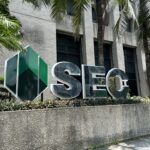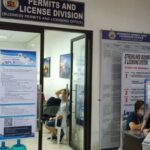

Once you have completed your statutory registration with the Securities and Exchange Commission, you must then apply for business permits from the Local Government Unit (LGU) that oversees your main address. This is the second point at which you will need to follow the correct procedure to ensure that you are fully compliant, legal, and able to operate your business.
Required Permits
Before applying for your Mayor’s Permit, you will need to get some basic permits in order to show that your business is legal.
- Barangay Business Permit – You must obtain a business permit from your Barangay where your office is located. This will require you to show your SEC Certificate of Incorporation, Approved Articles of Incorporation, By-Laws, and signed lease agreements or evidence of property ownership.
- Zoning Permit – You must obtain some kind of zoning permit from the city or municipal planning department to show that your business premises are suitable for your business. This will be issued by the Planning and Development Office. If you are operating from an industrial park, business park, or mixed-use development, you must ensure your business is listed correctly.
- Fire Safety Inspection Certificate (FSIC) – You will need to obtain this from the local branch of the Bureau of Fire Protection. This will ensure that you are compliant with the Fire Code of the Philippines (R.A. 9514). They will come to visit your premises to ensure that you are fully compliant with safety measures such as exit routes, fire extinguishers, wiring, alarms, and evacuation routes.
- Sanitation Permit – Your business must be fully compliant with sanitation regulations. You will need to obtain this from the city/municipality health office. They will visit your premises to ensure that you are compliant.
- Building Permit – If you are building your own premises or renovating your leased premises, you will need to obtain architectural, structural, electrical, plumbing, and mechanical permits.
- Environmental Clearance Certificate (ECC) – If your business involves any manufacturing, extraction, chemicals, or land development, you will need to obtain Environmental Clearance from the Department of Environment and Natural Resources (DENR).
- Special Permits – If you are in a particular industry, you may require permits from relevant government bodies. For example, if you are providing healthcare or food items, you may need a permit from the Food and Drug Administration (FDA). If you are providing telecommunications, you may need a permit from the National Telecommunications Commission (NTC).
- Landlord Approval – If you are leasing your premises, you will need to obtain landlord approval. This will include building approval and land tax clearance from your landlord.
- Public Liability Insurance – More and more municipalities will require you to prove that you have Public Liability Insurance to cover anyone visiting your business.
- Waste Disposal – If you are in an industrial/manufacturing business, you will need a waste disposal contract with an authorized waste collection company.
Applying to the Local Government Unit
This is the most important part of the application process. You will need to go to your local city/municipality’s Business Permit and Licensing Office (BPLO). You will need to prepare your documents.
- Complete a BPLO Application – You will need to complete the BPLO application. This will include details such as:
- Floor Space
- Number of Staff
- What industry you are in
- Declared Capital
- Local Taxes – The BPLO will determine what local taxes you will need to pay. These will include:
- Local Business Tax (LBT)
- Mayor’s Permit Fee
- Garbage Collection Fee
- Sanitation Fee
- Processing Fee
- Pay to City Treasurer – Based on the taxes and fees calculated, you will need to pay the local treasurer. This will give you a receipt.
- Receive Mayor’s Permit – Once everything has been checked, you will receive your Mayor’s Permit. This will include display plates, annual registration stickers, and sanitation signs. These will need to be displayed prominently.
- Business One Stop Shop (BOSS) – Many cities/municipalities have a one-stop shop for the application process during the annual licensing period. However, your documents will need to be checked by many different departments.
- Site Visit – After you have received your permit, the local authority will often do a site visit to check that you are compliant with sanitation, building regulations, and capacity.
- Tax Relief – If you are operating from a special area of the municipality, you will need to register your Mayor’s Permit with the local investment promotion board. This will give you tax relief.
- Building Signs – The local building office will want to see the signs outside your office. This includes signs, billboards, and branding. They will issue you with a sign permit.
- Weight & Measure – If you have scales, meters, or large measuring equipment, you will need to have them calibrated and sealed by the local treasurer.
- Online BPLO Account – Many LGUs now require you to create an account with an online business portal.
Registering with the Federal Tax Authority
You will need to register with the BIR once you have obtained your local permit. Your local permit should match up with the BIR.
- Submit BIR Form 1903 – Domestic Corporations must submit an application to register their company to the Revenue District Office (RDO) responsible for their main office within 30 days of receiving your SEC papers.
- Pay Annual Registration Fee – You will need to pay your annual administrative tax. You will also need to pay your documentary stamp tax (DST) on the following:
- Shares of Stock
- Lease Agreements
- Deeds
- Register Books – You will need to register your books. This can be a manual book, computerized accounting system (CAS), or loose-leaf book.
- Authorization to Print (ATP) – You will need to obtain an ATP to print invoices for your clients. This will allow you to charge for your business.
- Invoicing – If you are using ERP software, you will need to complete extra validation with the BIR.
- BIR Certificate of Registration (Form 2303) – This will show that you are registered with the BIR. It will show what taxes you are liable to pay, how often you must pay them, and the type of tax.
- Tax Exemption – If you qualify for any tax relief from certain economic zones or special laws, you will need to provide evidence to the BIR.
- Register Directors – The BIR will require you to provide Tax Identification Numbers (TIN) for all directors, incorporators, and officers.
- Point of Sale (POS) Machines – If you are in retail, hospitality, or any industry requiring a cash register, you will need to obtain a BIR permit for all your POS machines.
- Documentary Stamp Tax (DST) – You will need to calculate how much DST you owe on your lease agreement and submit it.
Common Issues with Local Permits
Applying for a permit from a local authority can be very complicated. This can cause delays with launching your new product, affect your cash flow projections, and cause delays with agreements. Applying for a business permit in the Philippines can be confusing due to the different processes, tax bands, and requirements across local authorities.
- Different Requirements – Different cities and municipalities have different requirements. They will impose their own local taxes, building regulations, and extra permits.
- No Building Permit – If you do not obtain a building permit, certificate of occupation, and building safety, you will not be able to obtain your main Mayor’s Permit.
- Mismatched Names – If your names do not match between your SEC documents, title deeds, lease, and application, you will be rejected.
- Dispute with Tax – If there is a dispute with your local business tax based on your initial capital or expected sales, you may run into problems when paying your fees at the City Treasurer.
- Multiple Agencies – As there are different local and national agencies involved, your permit can be delayed if one of them is late.
- Wrong Industry – If you classify your business into the wrong industry for tax purposes, you can run into problems. You could receive a large tax reassessment, fine, or penalty.
- Missed Deadlines – If you miss deadlines for your post-SEC tax registration or your local permits, you will be fined by the local treasurers and the BIR.
- No Lease Information – If your lease does not have the landlord’s tax, title transfer, and property tax, you will experience delays.
- Changes to Zoning – Sometimes there can be unexpected changes to local master planning. This can mean that you cannot operate certain industries in your chosen location. You will need to apply for a variance.
- Underestimated Time – Often companies underestimate how long it will take to get documents processed by local authorities.
Final Thoughts
Navigating through the local authorities, fire bureau, zoning, and tax can be very complex. This can cause large delays if you do not understand the local requirements. With Triple i Consulting, you can be assured that your Domestic Corporation will not make any expensive mistakes and will be fully authorized with all local and federal authorities.
Is Assistance Available?
Obtaining all of your business permits will allow you to successfully transition from your SEC incorporation. By obtaining permits from your local barangay, zoning, fire safety, mayor’s permit, and BIR, you will have a strong base for your Domestic Corporation. Contact us today to book a free initial consultation with one of our experts.
- Contact Us Here
- Fill out the form below
- Call us at: +63 (02) 8540-9623
- Send an email to: info@tripleiconsulting.com